
Choosing a Teak Pooja Mandir for Your Home: Size, Placement and Design
How to choose a teak wood pooja mandir: floor-standing vs wall-mounted, sizing for your deities, placement in apartments, jaali and brass details.

A pooja mandir is often the most personal piece of furniture in a home. Solid teak has long been the traditional choice: it’s durable, has a warm colour, and carves well for domes and jaali work.
Floor-standing or wall-mounted?
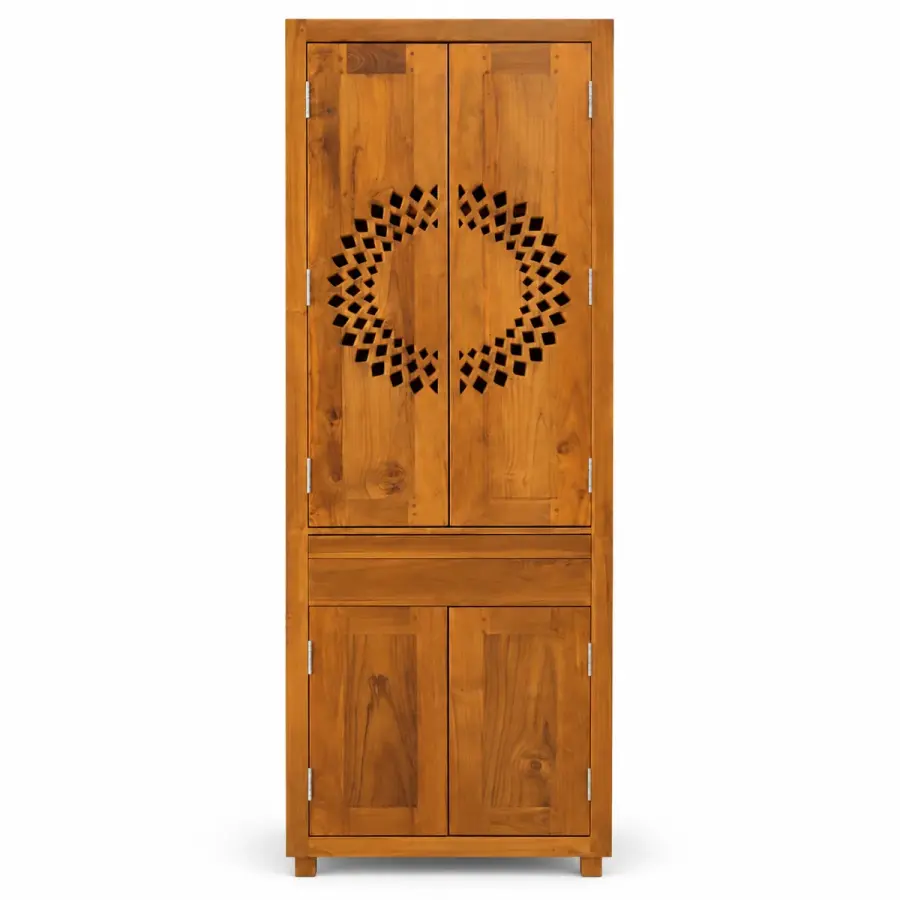
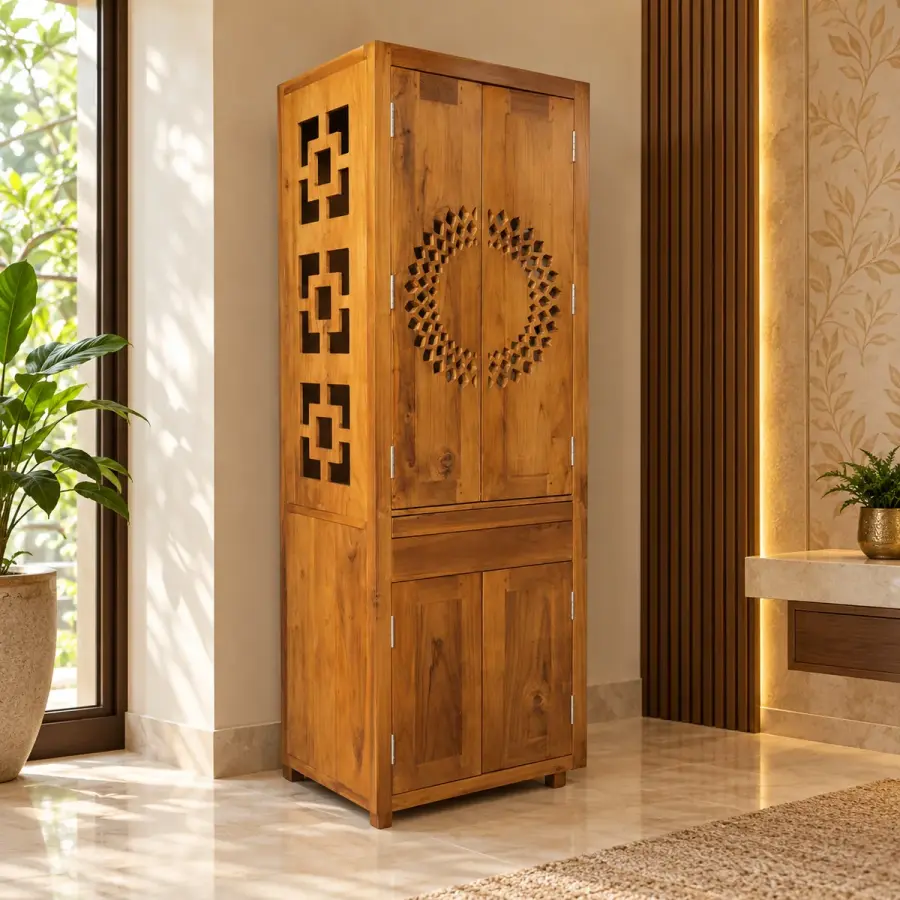
- Floor-standing mandirs have storage below for diyas, incense, oil and pooja items, and room for larger idols. They suit a dedicated pooja room or a corner of the hall. See the Om Jaali Tall Mandir.
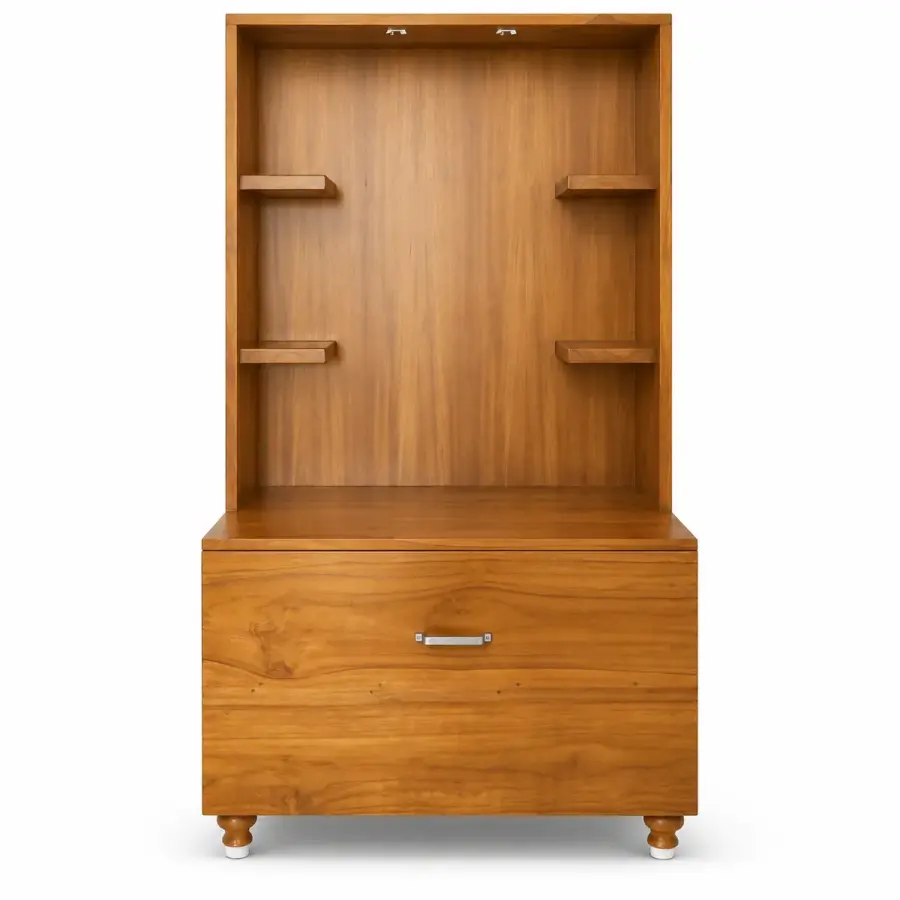
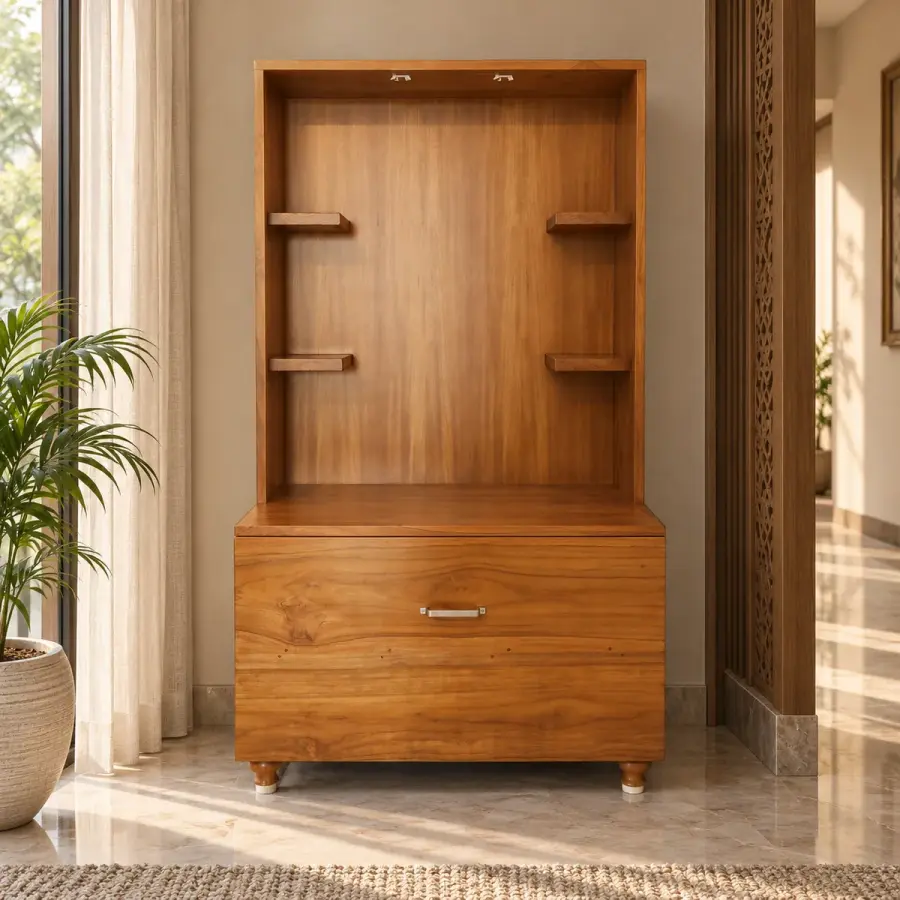
- Wall-mounted mandirs save floor space in apartments and keep the deities at eye level. See the Shelved Wall Mandir.
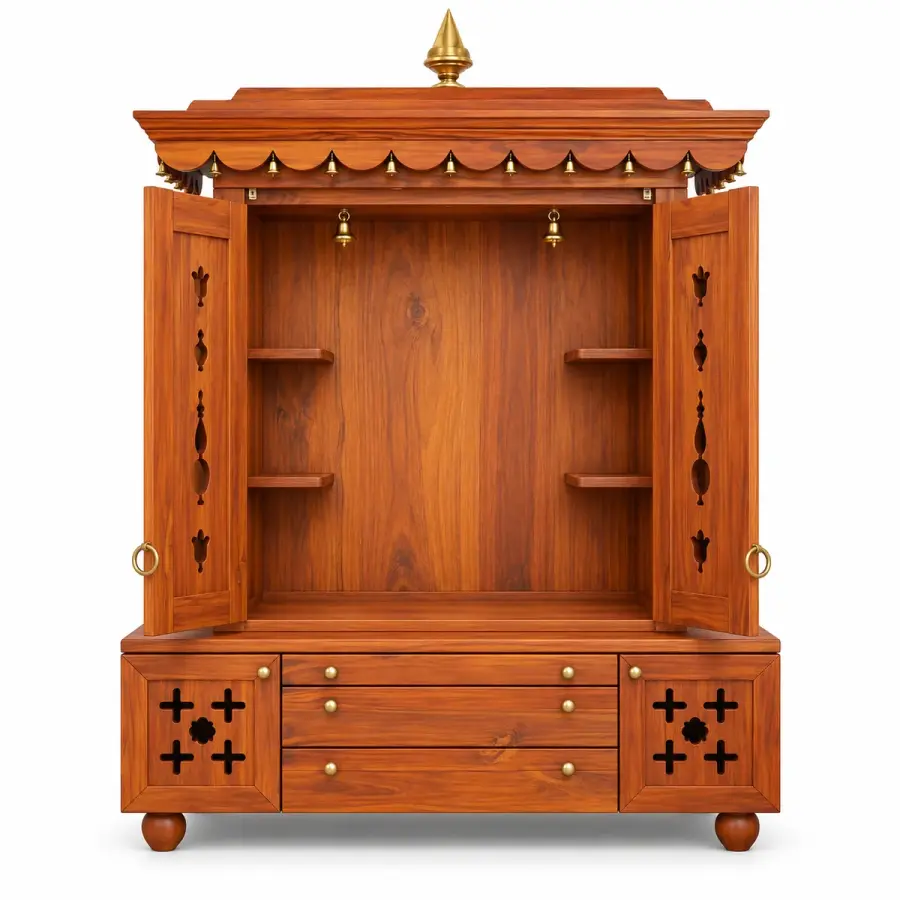
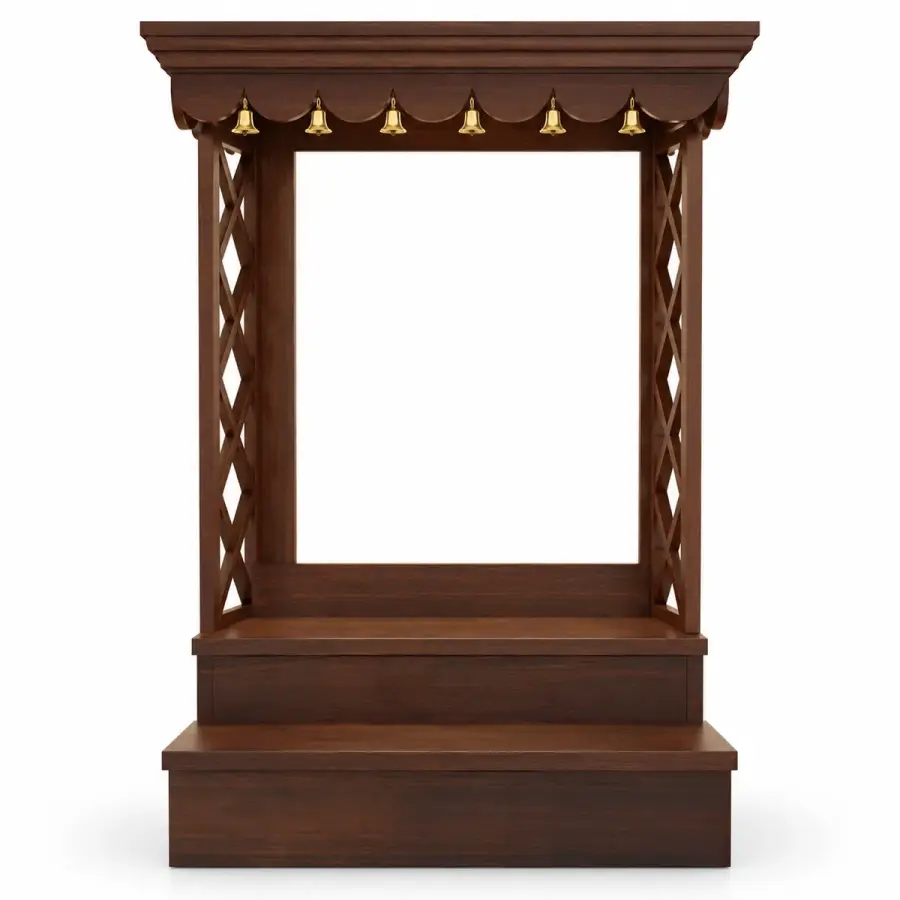
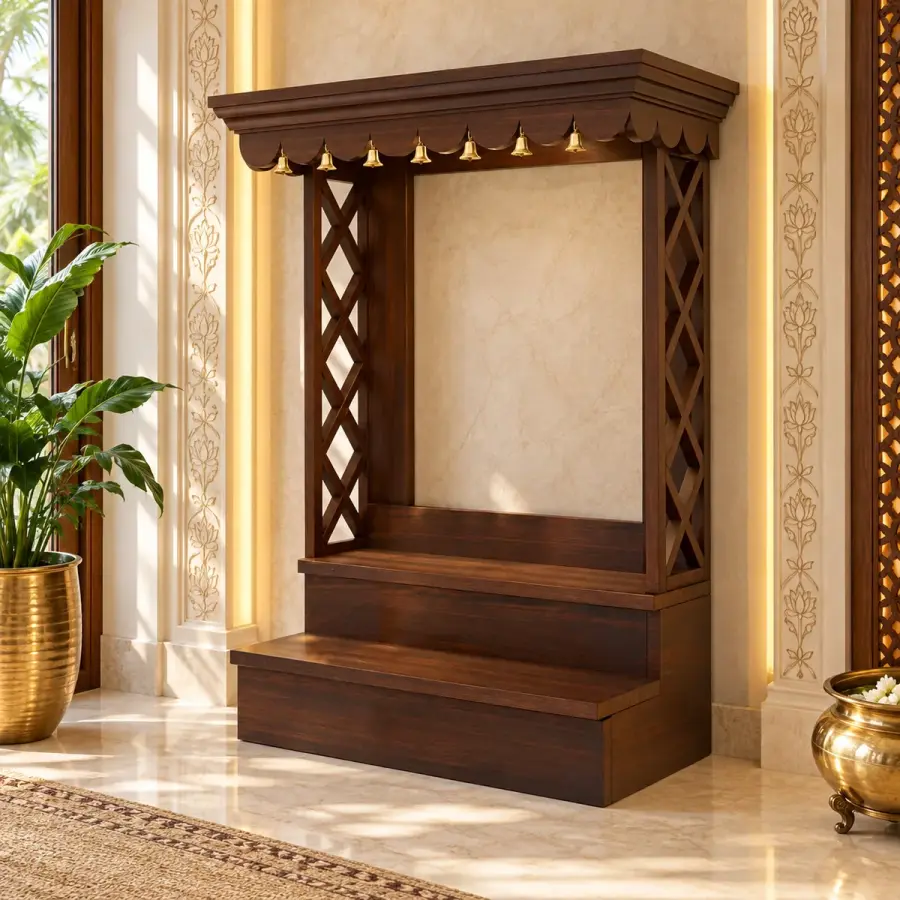
- Open mandirs have no doors, giving a lighter look. See the Brass Bell Open Mandir.
Sizing
Measure your largest idol or frame and allow space around it for a diya and flowers. Measure the wall or corner too: we make every mandir to order, so it can be sized to fit exactly.
Placement
Many families prefer a mandir facing east or north, in a calm part of the home away from the bathroom wall. In apartments, a corner of the living room or a kitchen wall is common. A wall mandir should be fixed at a height where the deities are at or slightly above eye level when standing.
Design details
- Jaali panels let light and incense smoke through.
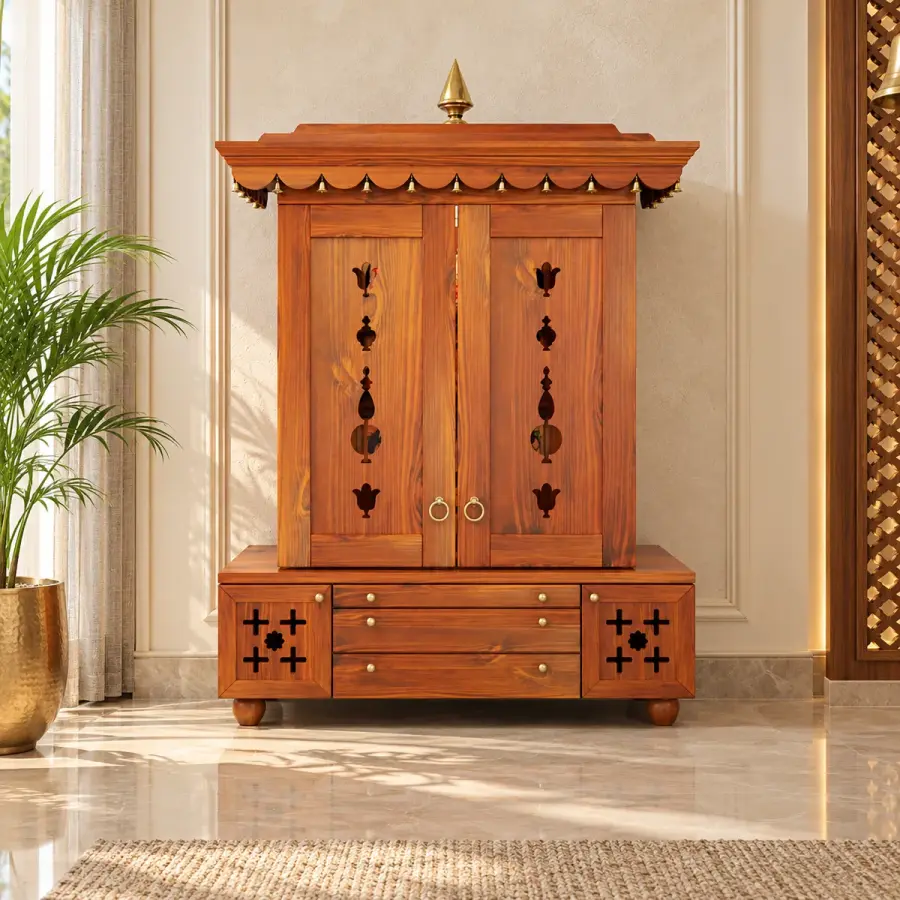
- Domes and kalash crowns give a temple feel. See the Kalash Crown Mandir.
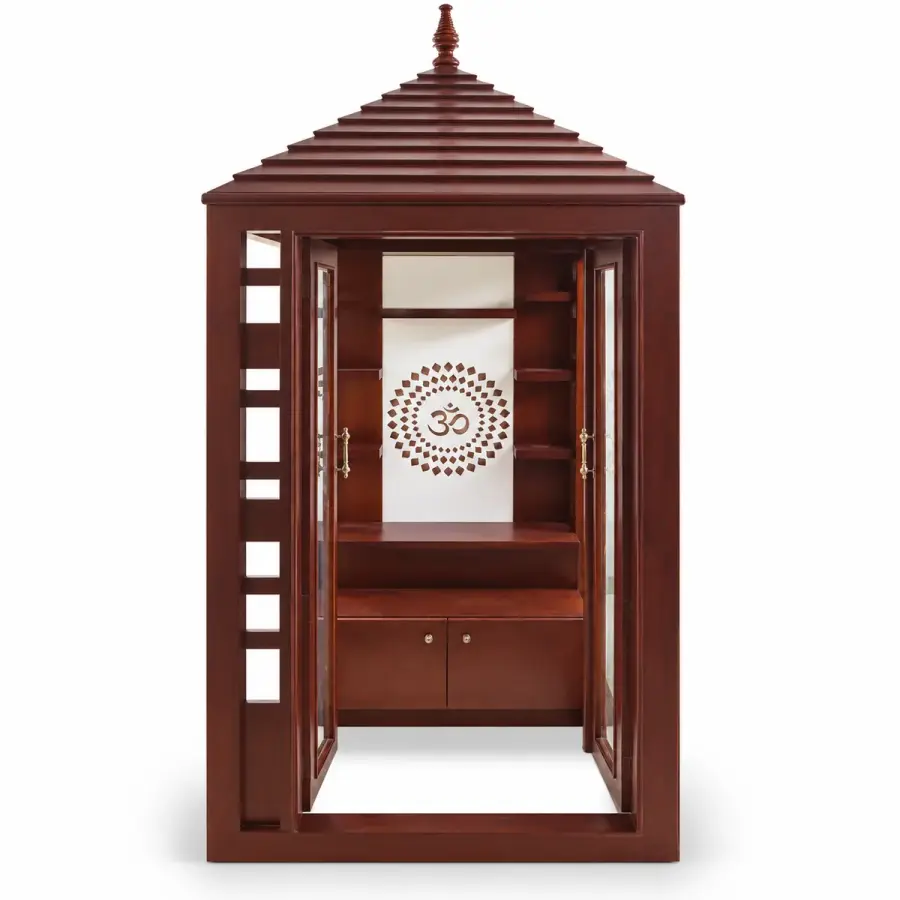
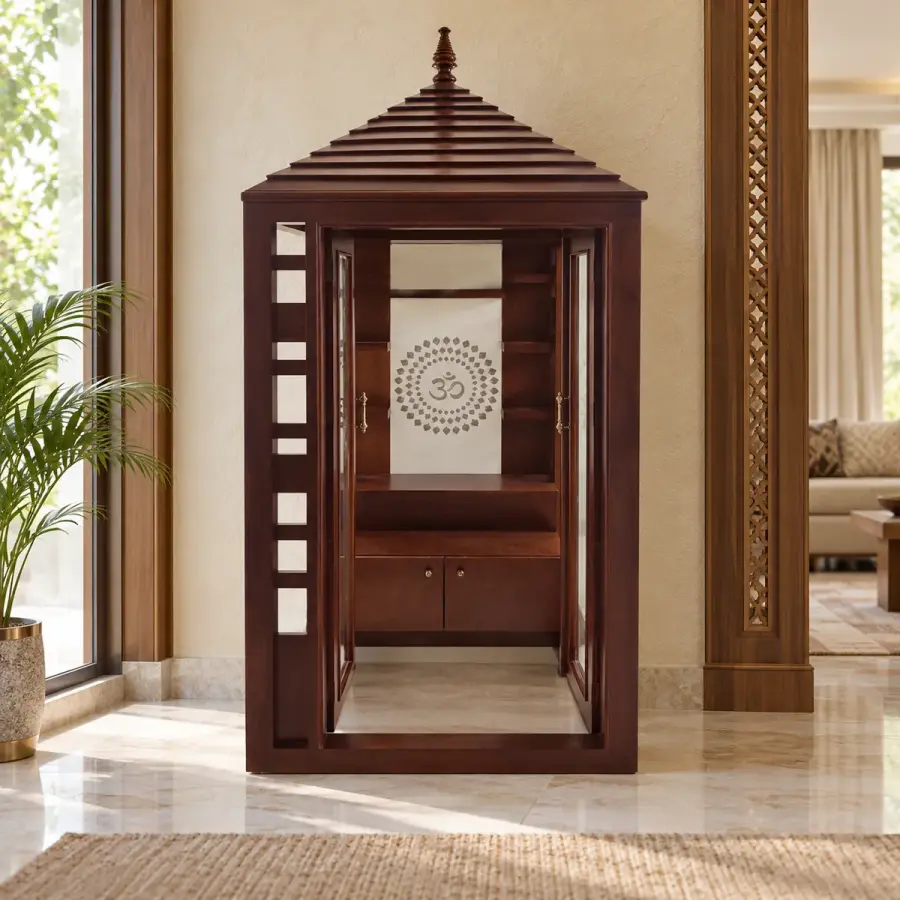
- Glass doors keep out dust. See the Om Glass Door Mandir.
- Bells, brass details and LED lighting can be added.
Care
Wipe soot from lamps regularly with a dry cloth, and place a small metal plate under diyas to protect the wood.
Browse all teak pooja mandirs, or send us your wall size on WhatsApp and we’ll suggest a design.
Pieces in this article
Planning furniture for your home?
Share your room size and what you have in mind — we’ll suggest pieces, finishes and a clear quote. Or visit our J P Nagar store.
More from the Feeds


