
Teak Swings (Oonjal and Jhula) for Bengaluru Homes: Ceiling-Hung or Free-Standing?
Choosing a teak swing for your Bengaluru home or balcony: ceiling-hung vs free-standing, sizes, chains and what apartments allow.

The teak oonjal is a fixture of South Indian homes, a place to sit with tea, read or rock a child to sleep. Today’s apartments make it a little trickier to install, but there’s a swing for almost every space.
Ceiling-hung swings
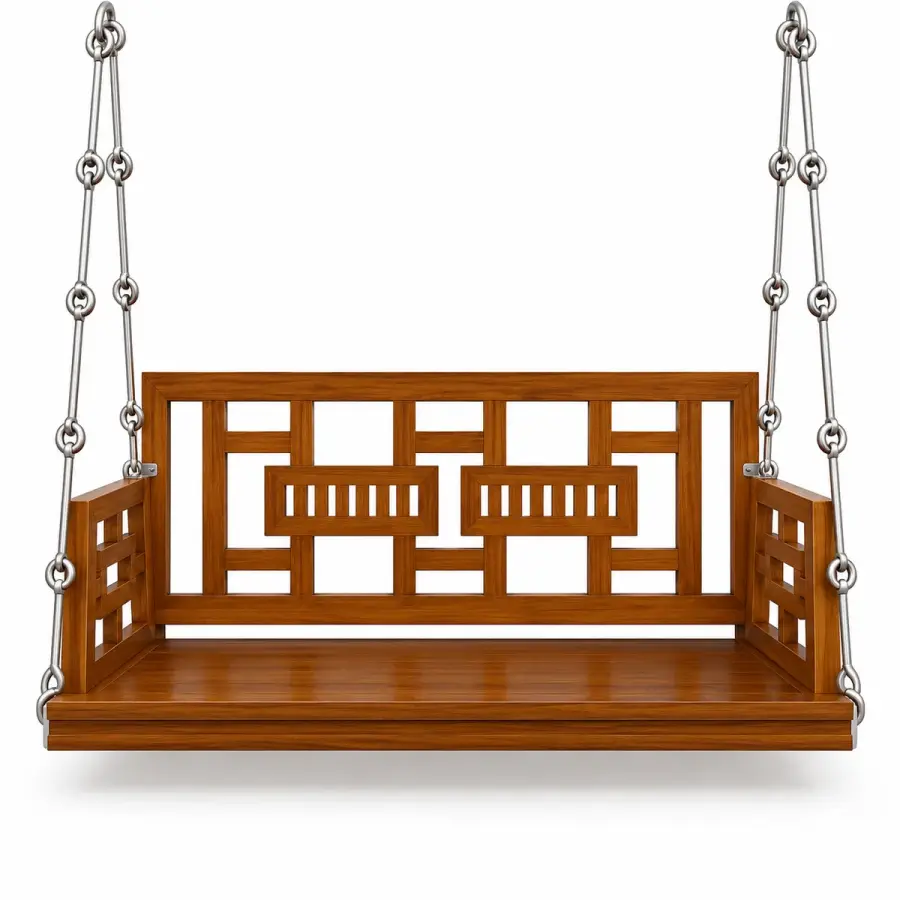
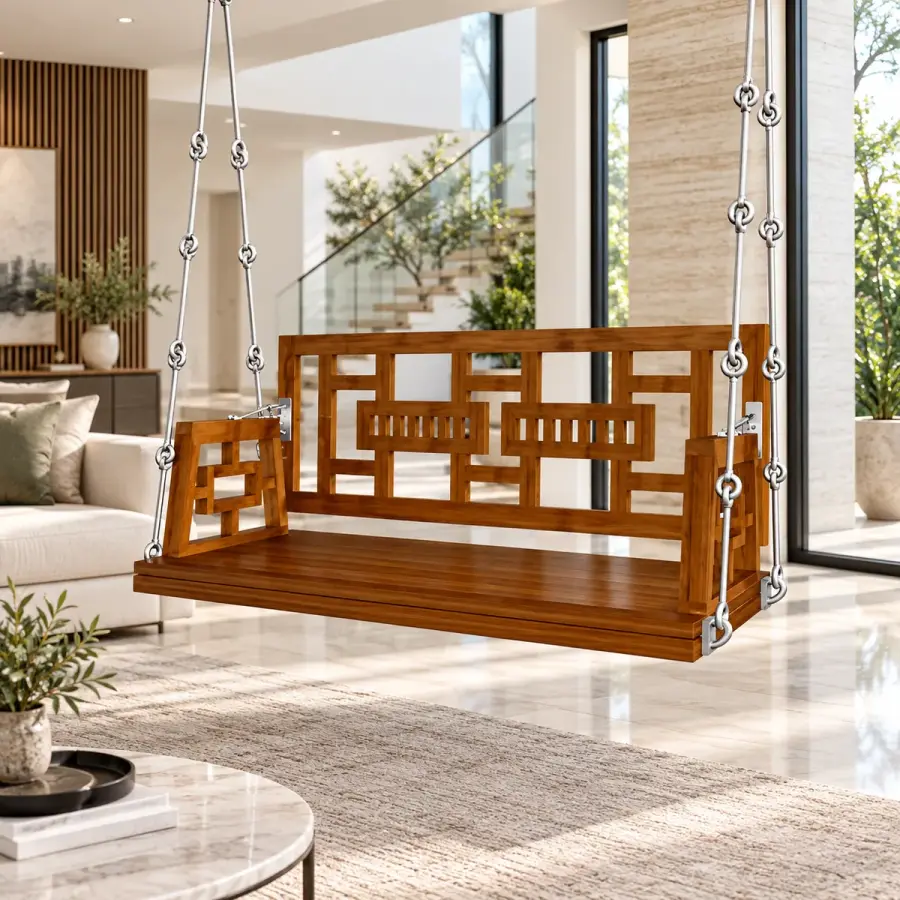
A plank swing hung from the ceiling on chains is the most traditional choice, and takes the least floor space. You’ll need:
- A concrete ceiling slab that can take hooks (not a false ceiling).
- Permission from your apartment association, if needed.
- About 3 feet of clear space in front and behind for the swing to move.
See the Fretwork Hanging Swing.
Free-standing swings
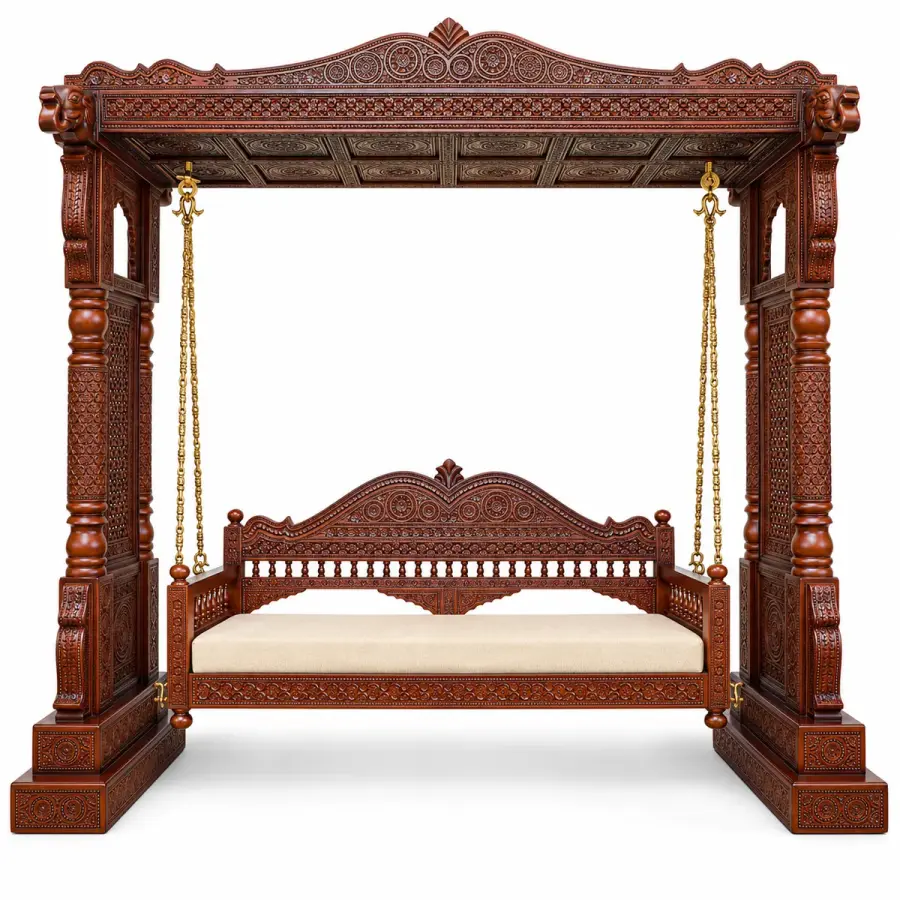
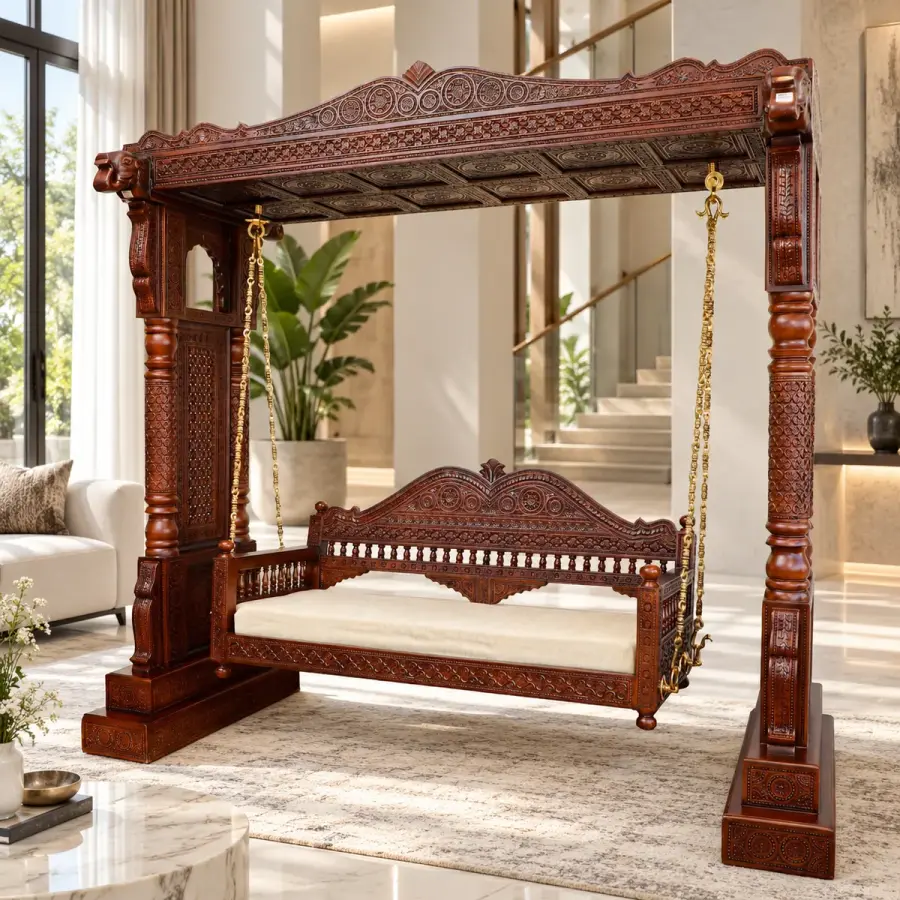
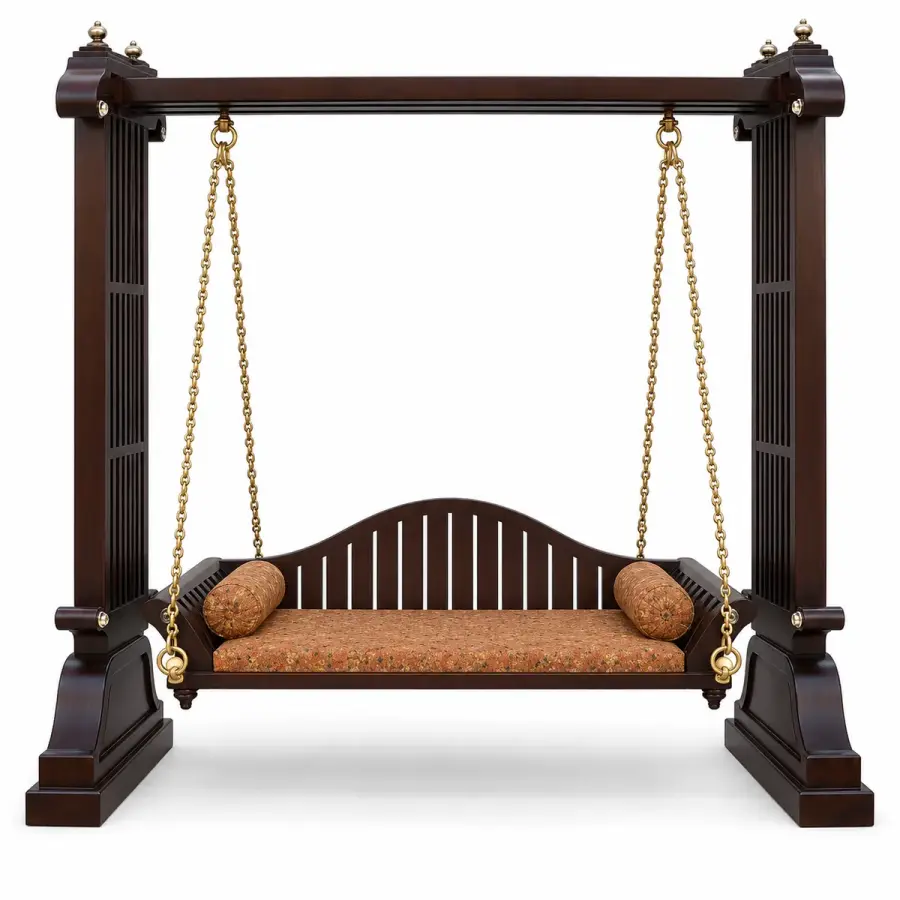
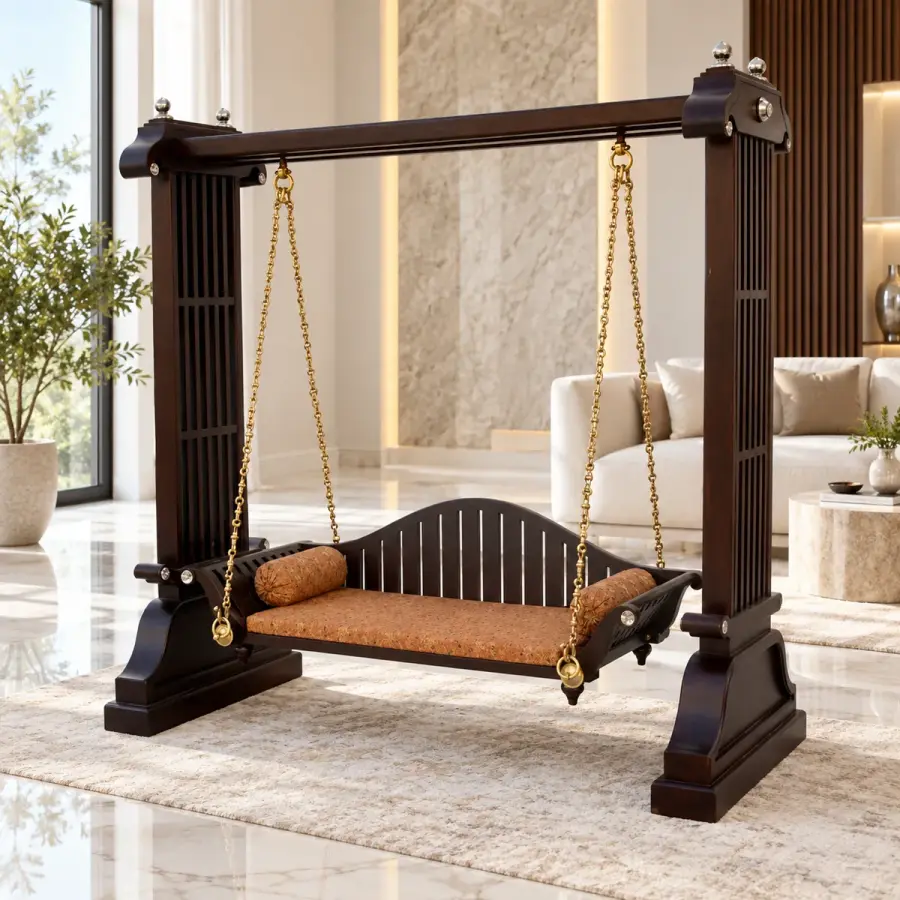
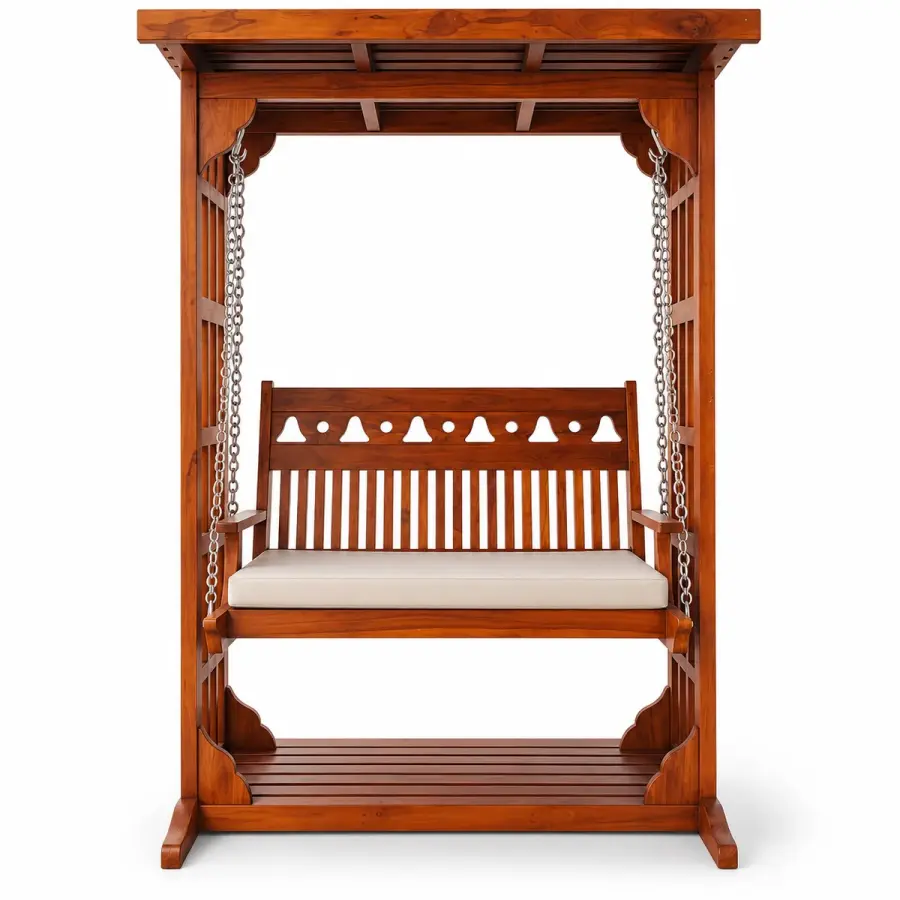
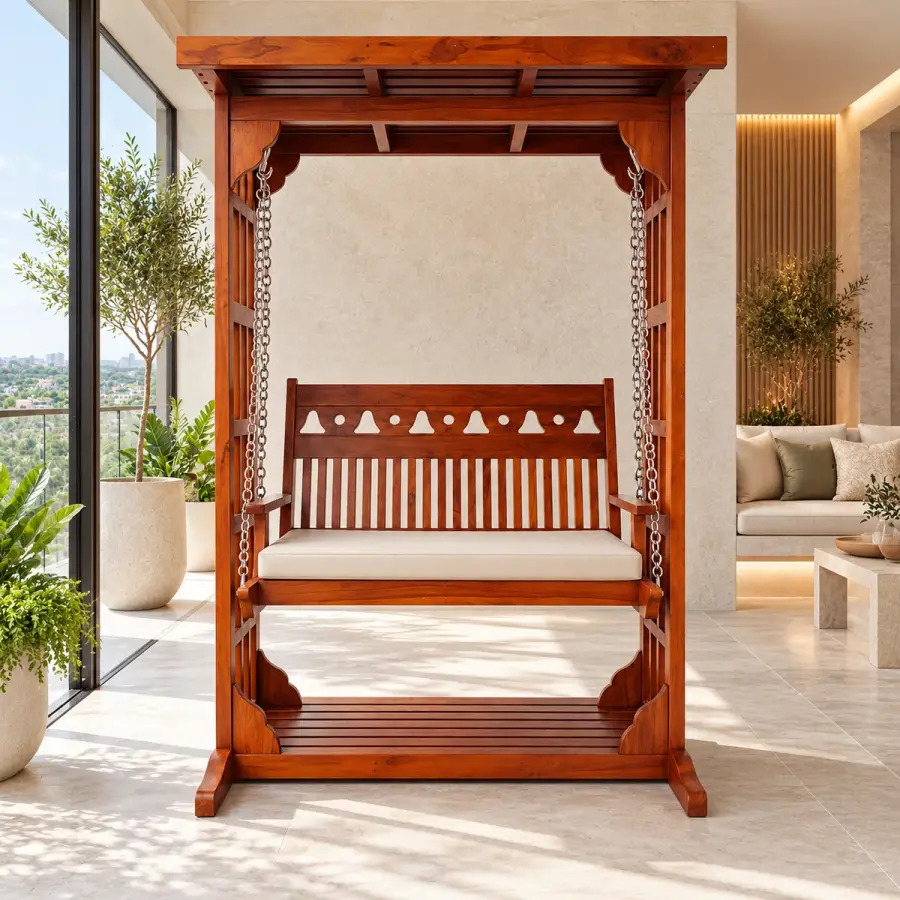
If drilling isn’t possible, choose a swing with its own teak frame. It needs more floor space but can be moved between the hall and balcony, and comes with you when you move home. The Classic Frame Jhula, Temple Canopy Jhula and Pergola Frame Swing are all free-standing.
Rope-hung and modern swings
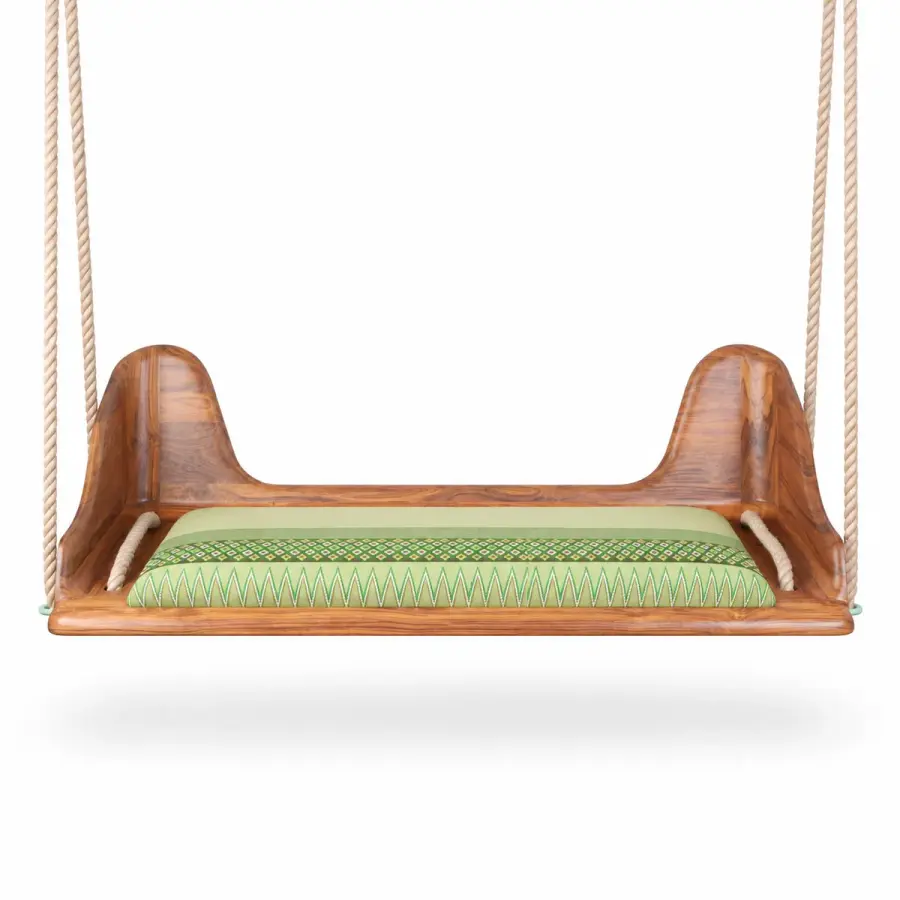
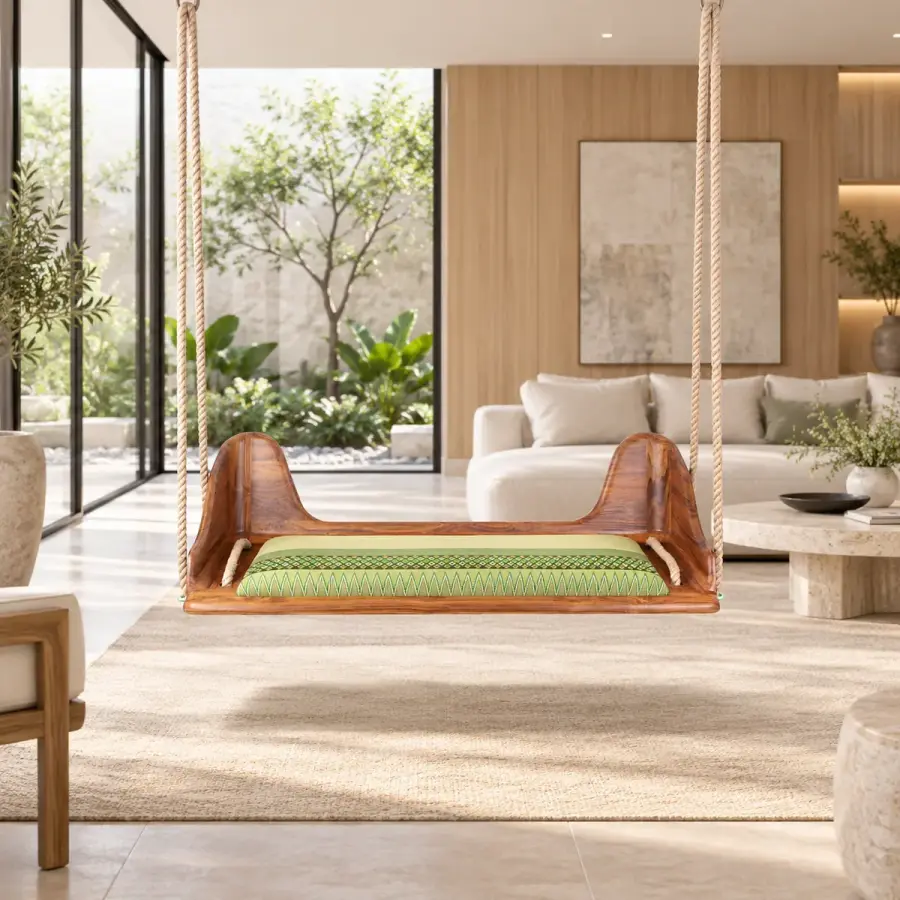
Rope-hung seats and curved bentwood swings suit balconies and modern interiors. They’re lighter and have a more casual look.
Size
A two-seater plank is usually 4–5 feet wide. Measure the wall and the swing’s arc before you choose.
Balconies and monsoon
Teak handles humidity well, so it’s a good choice for covered balconies. Keep cushioned swings out of direct rain and oil the wood occasionally.
Installation
We check the hook position with you before delivery and help with installation. Browse all teak swings or message us a photo of your space.
Pieces in this article
Planning furniture for your home?
Share your room size and what you have in mind — we’ll suggest pieces, finishes and a clear quote. Or visit our J P Nagar store.
More from the Feeds


